
Italian GT cars explained: the gran turismo legacy
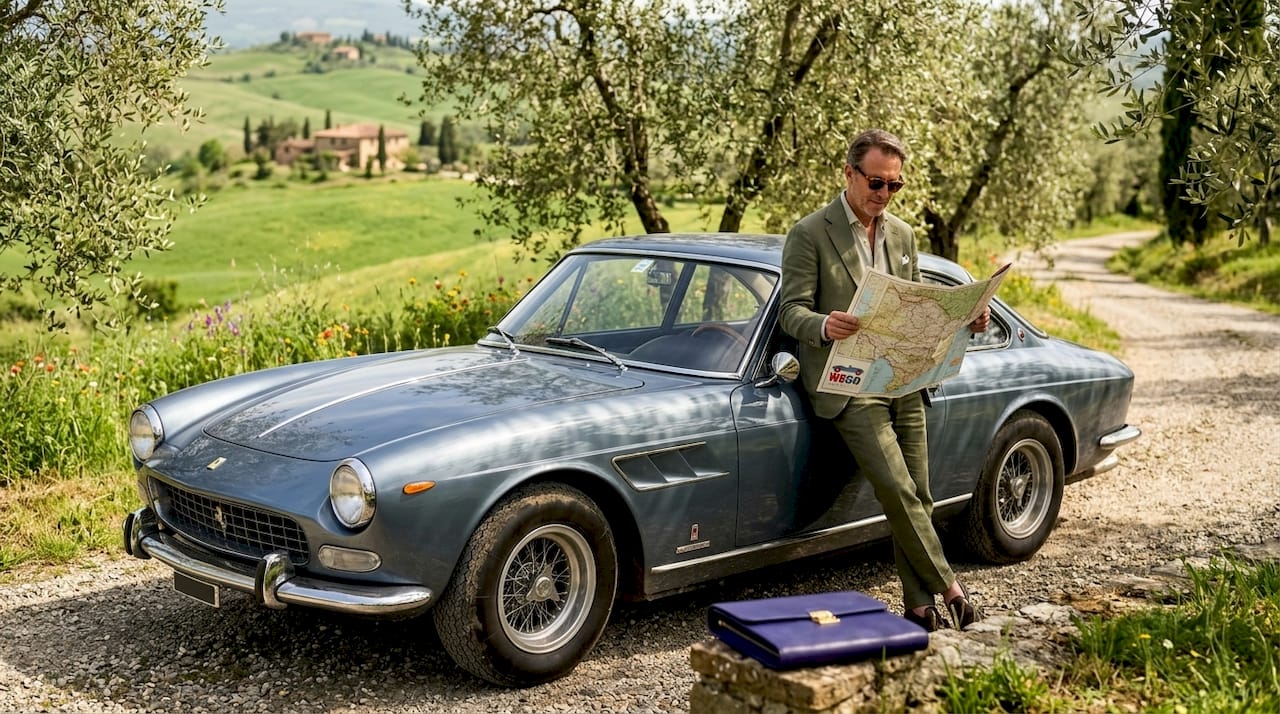
Not every Italian car with a “GT” badge is what you think it is. That three-letter label carries enormous weight in automotive culture, evoking winding Alpine passes, leather-wrapped cockpits, and the kind of effortless speed that makes a six-hour drive feel like an afternoon. But the truth is more complicated, and for anyone serious about Italian automotive heritage, whether you’re booking a classic car experience, building a collection, or simply trying to understand what separates a genuine grand tourer from a badge-wearing impostor, getting this right matters enormously.
Table of Contents
- The origins of the Italian GT: Meaning and heritage
- Key traits that define a true Italian GT car
- GT badge vs. reality: Not every ‘GT’ is a grand tourer
- Spotting and experiencing Italian GT cars: A guide for enthusiasts and travelers
- Why true Italian GT cars matter more than the badge suggests
- Explore Italy behind the wheel of a real GT classic
- Frequently asked questions
Key Takeaways
| Point | Details |
|---|---|
| ‘GT’ means grand touring | Italian GT cars were built for high-speed, luxurious long-distance journeys with comfort in mind. |
| Badge is not enough | Not every car labeled ‘GT’ delivers the authentic grand touring experience—know the key traits. |
| Spotting true GTs | Look for comfort, road-trip capability, refined handling, and classic Italian style when choosing a GT car. |
| Experience matters | Enjoying an Italian GT car on real roads is the best way to appreciate its unique blend of performance and luxury. |
The origins of the Italian GT: Meaning and heritage
Now that we’ve addressed the confusion, it’s essential to ground ourselves in the origins of the GT concept, especially as it emerged in postwar Italy.
Italy in the late 1940s and 1950s was rebuilding itself, and its car designers and engineers were doing something remarkable in parallel. They were imagining a new kind of automobile, one that could carry you from Milan to Rome in style, at speed, without destroying your back or your nerves. This was the gran turismoidea, born not from the racetrack but from the open road.
“A grand tourer is designed for fast, long-distance driving with luxury and comfort rather than just pure track-focused performance.”
The concept drew on a much older European tradition of the “grand tour,” the extended journey through the continent that wealthy travelers had undertaken for centuries. Italian coachbuilders and engineers took that romantic idea and gave it an engine. The result was a category of car that prioritized three things above all else:
- Speed over distance: Not the explosive sprint of a racecar, but the ability to cruise at genuinely high speeds for hours without mechanical protest
- Comfort for two: Enough luxury to arrive at your destination feeling refreshed, not wrung out
- Aesthetic integrity: Bodywork that was as beautiful at rest as it was in motion, because Italian design philosophy has never separated function from form
Early GT cars from houses like Ferrari, Maserati, and Lancia were answers to a very specific demand. Wealthy Italians and Europeans wanted something better than a sports car for long journeys, but more exciting than a luxury sedan. The GT was the answer, and it became one of the most influential automotive ideas of the twentieth century.
Key traits that define a true Italian GT car
With a historical lens in place, let’s break down what actually makes an Italian GT car stand out in feature and feel.
A common GT layout is a front-engine, two-door coupe with two-seat or 2+2 seating intended for road trips. That configuration is not arbitrary. A front-mounted engine distributes weight in a way that favors high-speed stability over cornering aggression. The two-door coupe body keeps weight down while allowing for a long, elegant roofline. The 2+2 seating option, with small rear seats, acknowledges that real travel sometimes involves a companion or luggage.
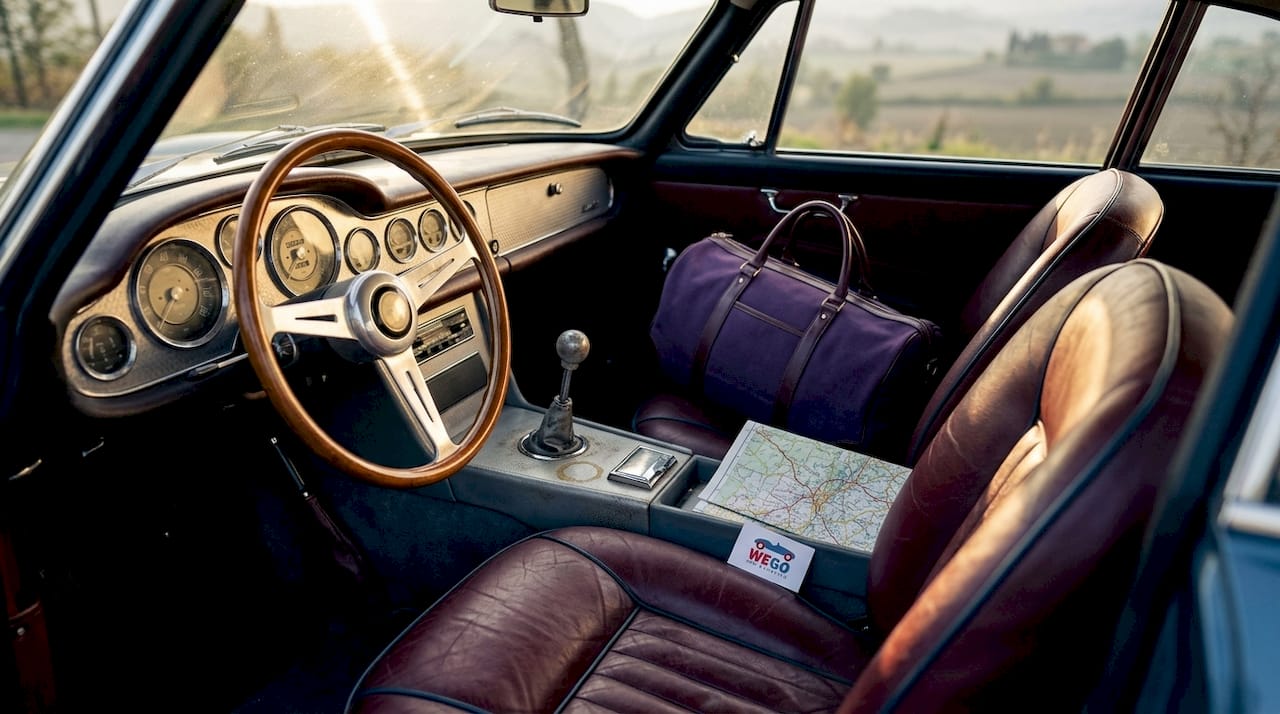
Here’s how a true Italian GT compares to other Italian car categories:
| Feature | Italian GT | Italian sports car | Italian supercar |
|---|---|---|---|
| Primary purpose | Long-distance touring | Spirited driving | Maximum performance |
| Engine position | Typically front | Front or mid | Mid or rear |
| Seating | 2 or 2+2 | 2 | 2 |
| Interior luxury | High | Moderate | Variable |
| Ride comfort | Prioritized | Secondary | Often compromised |
| Luggage space | Practical | Limited | Minimal |
| Ideal setting | Open roads, highways | Mountain passes | Track or showcase |
The GT identity shows up most clearly in comfort, long-distance capability, and refined road manners rather than outright track focus. This is the critical distinction that many enthusiasts miss. A true GT is not a watered-down supercar. It is a completely different philosophy of driving.
Key features to look for in a genuine Italian GT:
- A well-appointed interior with quality leather, real wood or metal trim, and ergonomic seating
- A suspension tuned for road comfort at sustained speed, not for maximum lateral grip
- A powerful but smooth engine, one that delivers torque across a wide range rather than peaking at high revs
- Adequate luggage capacity for an actual trip, not just a weekend bag
- Sound insulation that lets you hold a conversation at highway speed
Pro Tip: When evaluating a classic Italian GT for a classic car day trip, sit in the driver’s seat and check the headroom, the reach to the steering wheel, and the visibility. A real GT was designed for hours behind the wheel, and you’ll feel that in the ergonomics immediately.
The driving experience itself is another tell. A GT should feel planted and confident at 100 miles per hour on a straight road. It should absorb imperfections without drama. The steering should communicate what the road is doing without punishing your wrists. These qualities are not accidental. They are the result of deliberate engineering choices that prioritize the journey over the lap time.
GT badge vs. reality: Not every ‘GT’ is a grand tourer
Once you know the defining features, it’s crucial to be wary of models that claim “GT” in name alone. Let’s look at how to separate real grand tourers from the rest.
This is where things get uncomfortable for badge enthusiasts. The “GT” label is sometimes used loosely in model names, so an Italian car with “GT” in the badge is not automatically a true grand tourer. Manufacturers have applied the GT designation to everything from genuine long-distance cruisers to compact hatchbacks with a sport trim package. The badge became a marketing tool, and that dilution has caused real confusion.
Here’s a practical reference for evaluating any car claiming GT status:
| Evaluation criterion | True GT | Badge-only GT |
|---|---|---|
| Long-distance comfort | Excellent | Often average |
| Interior quality | Genuinely luxurious | Sometimes superficial |
| High-speed stability | Engineered for it | Incidental |
| Luggage capacity | Practical | Limited |
| Engine character | Smooth, torque-rich | Variable |
| Road trip suitability | Core purpose | Secondary |
The GT identity in comfort and long-distance capability is what separates authentic grand tourers from cars that simply borrowed the name for sales appeal. When you’re researching classic Italian cars for a rental or a purchase, this distinction is not academic. It determines whether you’ll arrive at your destination smiling or stiff.
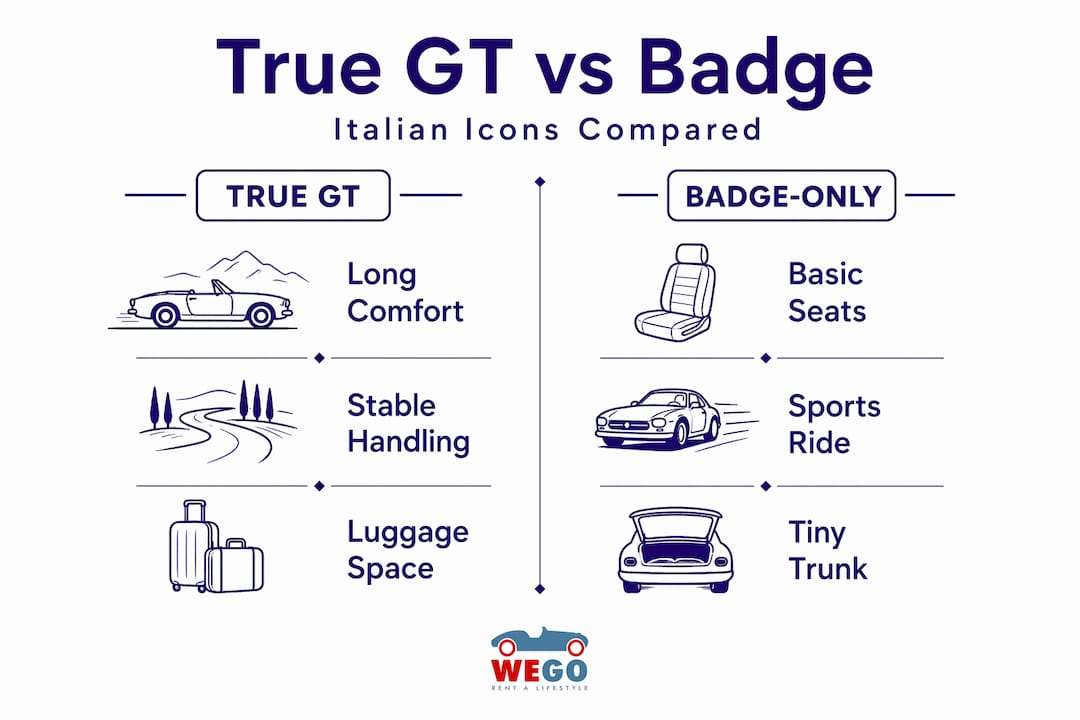
Some of the most beloved Italian cars in history wore the GT badge correctly. The Ferrari 250 GT, the Maserati Ghibli, and the Lancia Flaminia GT were all built around the idea of covering ground beautifully. Others used the letters more loosely. Knowing the difference protects your investment and, more importantly, your experience.
Pro Tip: Before booking any Italian GT tour, ask specifically about the model’s seating configuration, suspension setup, and luggage capacity. These three questions will tell you more about a car’s GT credentials than its badge ever will.
Spotting and experiencing Italian GT cars: A guide for enthusiasts and travelers
Armed with a sharper sense of what counts as a true Italian GT, let’s walk through how to confidently identify and enjoy these icons, whether viewing, collecting, or driving.
If you’re trying to spot a true Italian GT for a vintage or classic tour, look for road-trip intent: comfort and luxury, the ability to cruise at high speed for long distances, and a layout that supports stability and refinement. Then verify, because the “GT” badge can be marketing-applied to other styles.
Here’s a practical numbered checklist for identifying an authentic Italian GT:
- Check the roofline and body style. A proper GT coupe has a long, flowing roofline that suggests both elegance and aerodynamic intent. Stubby or upright proportions are a warning sign.
- Look at the engine placement. Front-mounted engines are the classic GT configuration. Mid or rear engines suggest a sports or supercar orientation.
- Examine the interior. Open the door and look at the seats, the dashboard materials, and the available space. A GT interior should feel like a well-appointed study, not a cockpit.
- Check the luggage compartment. A real GT has a usable trunk. If there’s barely room for a briefcase, you’re looking at a sports car wearing a GT badge.
- Research the suspension tuning. Original specifications for classic Italian GTs will show softer spring rates and more compliance than their sports car siblings from the same manufacturer.
- Ask about the car’s history and use. Authentic GTs were used for long journeys. A car with a documented touring history is almost always the real thing.
The best ways to experience an authentic Italian GT go well beyond museum visits. The car was made to move, and moving it through Italy’s landscape is the only way to truly understand what the designers intended. Options worth considering:
- Guided classic car tours through Tuscany, Lombardy, or the Veneto, where the roads themselves seem designed for grand touring
- Self-drive rentals on curated itineraries that take you through the kind of scenery these cars were built to cross
- Participation in organized classic car rallies, where you’ll meet other enthusiasts and see a wide range of authentic GT models in their natural environment
Pro Tip: When renting vintage cars in Italy, ask the operator to walk you through the car’s specific model history and how it fits the GT definition. A knowledgeable operator will be able to explain exactly why a particular car qualifies, and that conversation alone will deepen your appreciation before you turn the key.
The roads of Italy are not incidental to this experience. The Autostrada del Sole, the coastal roads of Liguria, the vine-lined lanes of Chianti, these are the routes that Italian GT cars were designed to conquer. Driving them in an authentic gran turismo is not nostalgia. It’s the car fulfilling its original purpose.
Why true Italian GT cars matter more than the badge suggests
Here’s our honest take, shaped by years of putting enthusiasts and travelers into classic Italian cars across some of the most beautiful roads in Europe.
The GT designation is often contested and misused, and that’s a shame, because the genuine article is one of the most remarkable things automotive culture has ever produced. But we’ve noticed something consistent: the people who arrive focused on the badge often leave talking about something else entirely. They talk about the sound of the engine settling into a highway rhythm. They talk about the way the car felt planted through a long, sweeping curve. They talk about arriving somewhere and feeling like the drive was the destination.
That’s what a real Italian GT does. It doesn’t perform for you. It partners with you.
The uncomfortable truth is that many modern cars marketed as grand tourers, and quite a few classic ones, are really sports cars with better seats. They’re exciting in short bursts but exhausting over distance. A true GT is the opposite. It gets better the longer you drive it. The suspension finds its rhythm. The engine settles. You stop managing the car and start simply traveling in it.
We’ve seen this happen with the Ferrari GTS 208, a car that surprises people who expect raw aggression and instead find something more nuanced: a machine that rewards patience and distance. That’s the gran turismo character. It’s not about the badge on the hood. It’s about what happens after the first hundred miles.
Understanding this distinction changes how you approach Italian automotive heritage. You stop chasing names and start evaluating character. And that shift makes every classic car experience richer, whether you’re renting for a day or building a collection over a lifetime.
Explore Italy behind the wheel of a real GT classic
If you’re now inspired to move from knowledge to experience, here’s how you can take the next step confidently.
Reading about Italian GT cars is one thing. Driving one through the hills of Tuscany or along the shores of Lake Como is something you won’t forget. We’ve built our entire offering around giving you access to authentic classic and vintage GT models, the kind that were designed for exactly this kind of journey.
Whether you want to rent a classic GT car for a special occasion, plan a full touring itinerary, or simply spend a day on iconic Italian roads in a car that belongs there, we have options tailored to your goals. Our classic GT day trips are curated to put you on the best roads with the right car, so the experience matches everything you’ve just learned about what a real gran turismo should feel like. Reach out and let’s plan your drive.
Frequently asked questions
What does ‘GT’ stand for in Italian cars?
“GT” stands for gran turismo, meaning grand touring, a style focused on long-distance comfort and high-speed travel rather than pure performance.
Are all cars with a ‘GT’ badge true Italian grand tourers?
No. “GT” is sometimes used loosely in model names, and a badge alone does not guarantee a car meets traditional grand touring standards.
What features should I look for in a classic Italian GT car?
Look for long-distance comfort, high-speed stability, elegant interiors, practical luggage space, and a road-trip-oriented design rather than track-focused engineering.
How are Italian GT cars different from Italian supercars?
GT cars balance comfort and speed for long trips, while supercars prioritize maximum performance and handling, often at the expense of everyday comfort and usability.
Can I rent an authentic Italian GT car for a tour?
Yes, select operators in Italy offer carefully curated classic and vintage GT car rentals specifically designed for road trips, guided tours, and special occasions across Italy’s most scenic regions.
