
What is a destination wedding in Italy: your full guide
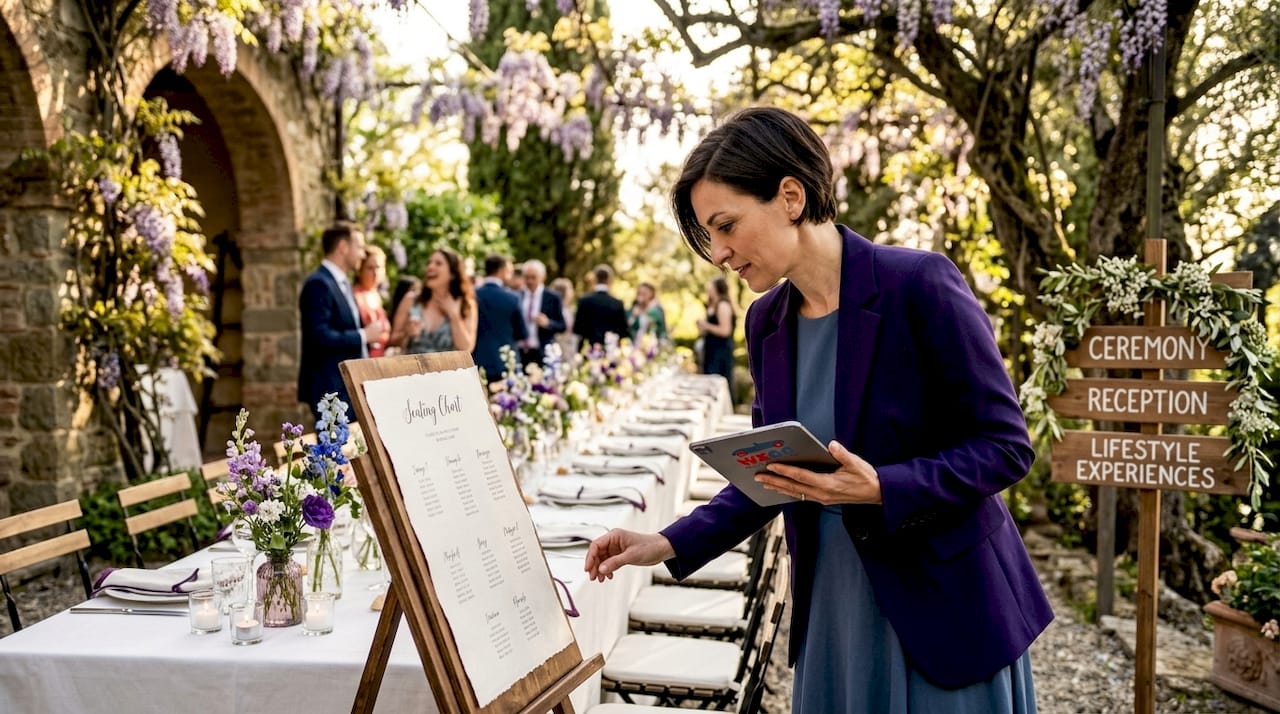
More than 70% of destination weddings in Italy are symbolic ceremonies, meaning couples can marry on a Tuscan hilltop, inside a Sicilian baroque palace, or on a Lake Como terrace without filing a single piece of Italian legal paperwork. That surprises most couples who assume a destination wedding in Italy means navigating foreign bureaucracy. What is a destination wedding Italy, really? It is a multi-day celebration built around Italy’s landscapes, food, and culture, and it comes in more forms, at more price points, and with more creative freedom than most people realize before they start planning.
Table of Contents
- Understanding destination weddings in Italy: types and timing
- Top regions and venues for destination weddings in Italy
- Navigating legal requirements and music permits for your Italian wedding
- Designing a multi-day Italian destination wedding experience
- Incorporating luxury vintage car rentals into your Italian wedding
- Why symbolic ceremonies and local planners are essential for stress-free Italian weddings
- Enhance your Italian destination wedding with WEGO’s vintage car rentals and tours
- Frequently asked questions
Key Takeaways
| Point | Details |
|---|---|
| Symbolic ceremonies popular | Over 70% of destination weddings in Italy are symbolic, allowing creative freedom and avoiding complex legal paperwork. |
| Plan 18-24 months ahead | To secure top venues and vendors, couples should start planning their Italian wedding at least 18 to 24 months in advance. |
| Venue variety across Italy | Regions like Lake Como, Amalfi Coast, Tuscany, and Sicily offer distinct venue styles and atmospheres for every couple’s taste. |
| Legal and music permits needed | Civil weddings require detailed legal documents, and all weddings playing modern music need SIAE permits obtained 30-60 days before. |
| Vintage cars add charm | Luxury vintage car rentals enhance the wedding experience with stylish transport and memorable photo opportunities. |
Understanding destination weddings in Italy: types and timing
Let’s first clarify the various ceremony types and why timing matters so much for planning your Italian wedding.
A destination wedding in Italy falls into one of three categories: symbolic, civil, or religious. Each comes with a completely different planning load.
Symbolic ceremonies are non-legally binding celebrations. You marry legally in your home country before or after the Italian event, and the Italian ceremony is purely for experience and meaning. Symbolic ceremonies account for 64% to 70%+ of foreign destination weddings in Italy, and for good reason. You can hold them anywhere, customize every detail, and skip the Italian bureaucratic process entirely.
Civil ceremonies are legally binding in Italy and require coordination with the local municipality (Comune). You will need:
- A Nulla Osta (certificate of no impediment) from your home country’s consulate in Italy
- Apostilled birth certificates and identity documents
- Certified translations of all documents into Italian
- A formal request to the Comune at least 6 to 9 months before the wedding date
Religious ceremonies (typically Catholic) are legally recognized in Italy but require both partners to meet specific religious criteria, plus coordination between the Italian diocese and your home parish.
For destination wedding planning in Italy, here is a realistic timeline:
- 18 to 24 months out: Choose ceremony type, set a budget, and hire a local planner
- 12 to 18 months out: Book venue, caterer, photographer, and accommodation blocks
- 6 to 9 months out: Begin legal paperwork for civil ceremonies; confirm guest list
- 3 to 6 months out: Finalize florals, music, transport, and catering menus
- 30 to 60 days out: Obtain SIAE music permit if required; confirm all vendor timelines
Planning should start 18 to 24 months in advance for luxury weddings, with key paperwork beginning 6 to 9 months out. Underestimating this timeline is the most common and costly mistake couples make.
Pro Tip: Hire a local Italian wedding planner before you book anything else. They know which vendors are reliable, which venues have hidden costs, and how to handle the legal and logistical details that trip up remote couples every time.
Top regions and venues for destination weddings in Italy
Now that you understand wedding types and timing, let’s explore where in Italy you might say your vows.
Lake Como, Amalfi Coast, Sicily, Tuscany, and Rome stand out as the dominant destination wedding locations in Italy, each with distinct character, vendor ecosystems, and price points.
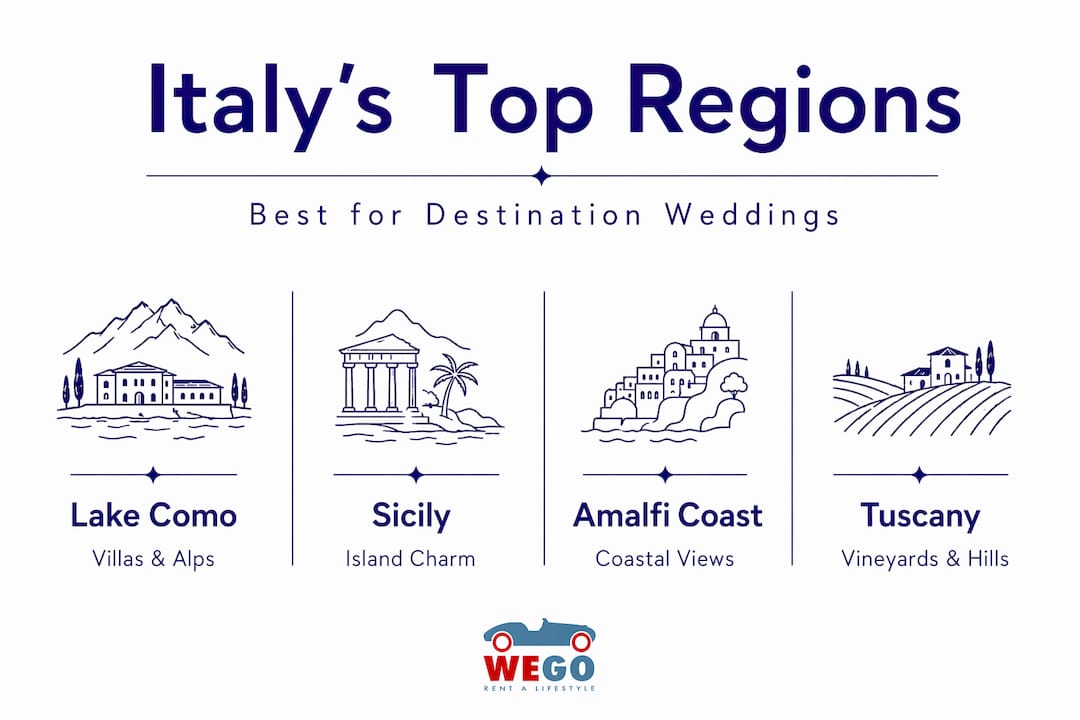
| Region | Venue style | Unique features | Average starting cost |
|---|---|---|---|
| Lake Como | Alpine villas, lakeside terraces | Mountain backdrop, celebrity appeal | €15,000+ |
| Amalfi Coast | Clifftop gardens, historic hotels | Dramatic sea views, vertical terrain | €18,000+ |
| Tuscany | Castles, vineyards, farmhouses | Rolling hills, wine country, rustic luxury | €12,000+ |
| Sicily | Baroque palaces, rural masserie | Raw history, affordability, authenticity | €8,000+ |
| Rome | Historic villas, rooftop terraces | Imperial grandeur, urban energy | €14,000+ |
Sicily offers rugged, less polished venues with rich history and affordability, and it has attracted a new wave of couples who want something real rather than picture-perfect. Artists, chefs, and creatives are choosing Sicilian masserie (traditional farmhouses) over the more manicured venues of the north.
For the best places for weddings in Italy, keep these points in mind:
- Lake Como is ideal for couples who want weddings at Lake Como with alpine elegance and easy access from Milan’s airports
- Amalfi requires serious logistical planning because the roads are narrow and vendor access is complicated
- Tuscany offers the widest variety of venue styles at the most accessible price range
- Rome suits couples who want urban sophistication and wedding destinations in Rome with imperial history as a backdrop
Peak wedding season runs from May through October. Book your venue at least 18 months out for any of these regions, especially for Saturdays in June and September. For luxury wedding hotels in Italy, early reservation is non-negotiable.
Navigating legal requirements and music permits for your Italian wedding
Understanding legal and music permit requirements is crucial for a smooth wedding day in Italy.
For a legally binding civil wedding, civil weddings require a Nulla Osta from your home country’s consulate in Italy, plus apostilled certificates submitted 6 to 9 months in advance. Here is the step-by-step process:
- Contact your country’s consulate in Italy to request the Nulla Osta
- Obtain apostilled birth certificates from your home country’s government
- Have all documents professionally translated into Italian by a certified translator
- Submit documents to the local Comune (municipality) where the wedding will take place
- Attend a formal appointment at the Comune to confirm the ceremony date and officiant
One aspect that catches couples off guard regardless of ceremony type: the music permit. The SIAE music permit is mandatory for all weddings with contemporary music, costing between €160 and €400, and must be paid 30 to 60 days before the event. SIAE (Società Italiana degli Autori ed Editori) is Italy’s copyright authority. Any music composed within the last 100 years requires this license, which covers your DJ, live band, or playlist.
Key documents and requirements at a glance:
- Nulla Osta: Certificate of no impediment from your home consulate
- Apostille: Authentication stamp on official documents
- Certified translations: All documents must be in Italian
- SIAE permit: Required for any music at the reception or ceremony
- Comune appointment: Mandatory for civil ceremonies to confirm legal standing
Pro Tip: Give your Italian wedding planner authority to handle the SIAE application directly. The process involves specific forms and deadlines that vary by municipality, and a planner who has done it dozens of times will prevent a last-minute scramble.
Symbolic ceremonies bypass all civil paperwork, but they carry no legal weight in Italy. Your marriage is only recognized if you legalize it in your home country before or after the event.
Designing a multi-day Italian destination wedding experience
Beyond paperwork, crafting an unforgettable multi-day celebration is key to the Italian destination wedding experience.
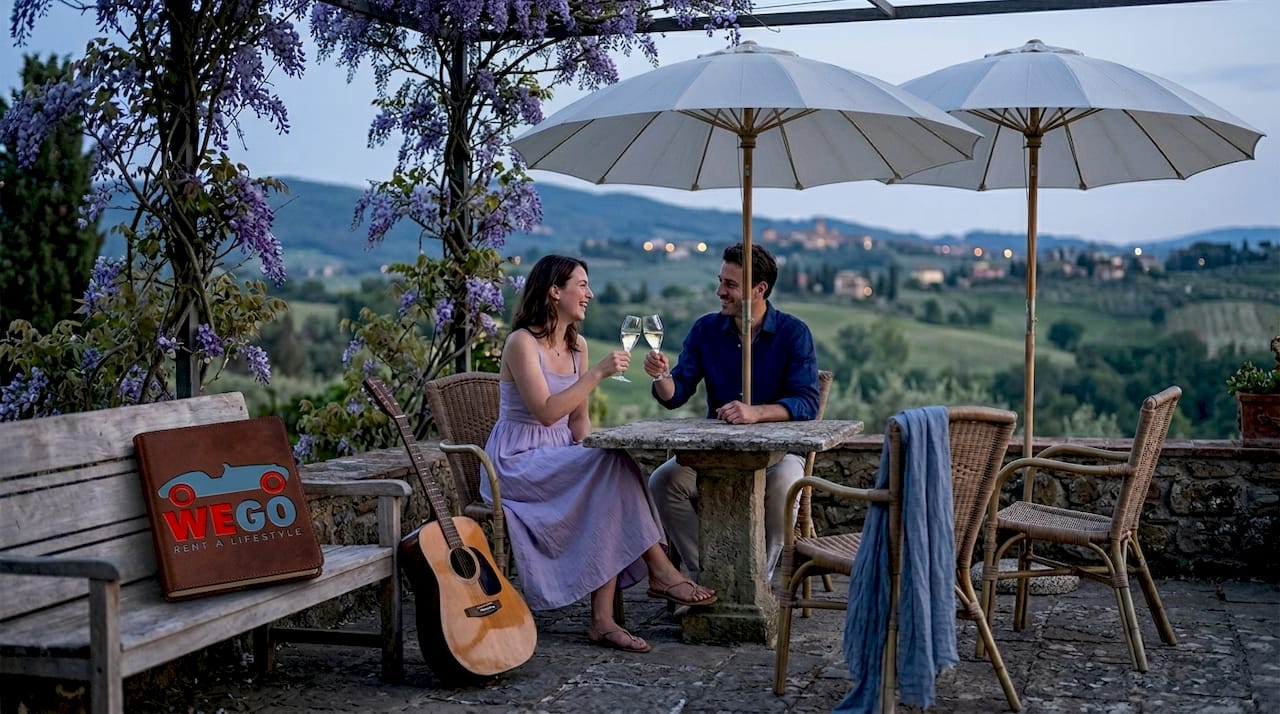
Destination weddings in Italy typically last 2 to 3 days with welcome dinners, ceremonies, receptions, and farewell brunches woven together into a full experience. This is not just a wedding. It is a curated journey through Italian food, wine, landscape, and culture.
A typical structure looks like this:
- Day 1, welcome dinner: An intimate gathering at a local trattoria or villa courtyard. Regional wines, antipasti, and a chance for guests to arrive and settle in. This is where the tone gets set.
- Day 2, ceremony and reception: The main event. Ceremony at the chosen venue, followed by a multi-course dinner with local dishes, live music, and dancing that runs well past midnight.
- Day 3, farewell brunch: A relaxed morning gathering. Pastries, coffee, prosecco, and time for guests to say goodbye before departing.
Italian weddings excel as immersive celebrations designed as a journey, not just an event, with guests fed multiple times and surrounded by authentic regional culture throughout.
Consider these tips for Italian multi-day wedding celebrations:
- Schedule at least one free afternoon so guests can explore independently
- Pair each meal with wines from the specific region you are in
- Arrange group transport between venues so no guest is left navigating unfamiliar roads alone
- Build in a cultural experience, such as an olive oil tasting or a cooking class, as a guest activity
Pro Tip: Space your three events across the day and evening rather than stacking them back to back. Guests who travel internationally need breathing room, and a relaxed pace makes the whole celebration feel more generous.
Incorporating luxury vintage car rentals into your Italian wedding
Another way to create a memorable Italian wedding is through iconic vintage car rentals for style and convenience.
A classic car is not just transport. It is a prop, a moment, and a memory. Pulling up to your ceremony in a 1960s Alfa Romeo or a Porsche 356 against a Tuscan backdrop creates the kind of photograph that defines the entire wedding album. Luxury vintage car rentals in Italy add a layer of elegance that no modern vehicle can replicate.
Here is how classic cars integrate into a wedding itinerary:
- Ceremony arrival: The couple arrives in a vintage car, creating a dramatic entrance and immediate photo opportunity
- Post-ceremony portraits: A scenic drive through the surrounding landscape for editorial-style photography
- Guest transport: A fleet of classic cars moves guests between the ceremony and reception venue in style
- Farewell send-off: The couple departs in a vintage vehicle as guests wave them off
Popular models for Italian weddings include open-top roadsters for sunny Amalfi drives, elegant sedans for Lake Como villa arrivals, and rugged vintage Fiats for Tuscan countryside routes. Each model brings a different visual character to your photos and your day.
Vintage car experiences for weddings can also be extended into a full day tour for guests, turning a transport arrangement into an activity. Imagine your guests spending the morning before the ceremony on a guided drive through Chianti vineyards, arriving at the venue already immersed in the Italian experience.
Pro Tip: Book your classic car hire for destination weddings at the same time you book your venue. The most sought-after models get reserved months in advance, especially during peak season from May to October. For luxury wedding transport services, early planning is the difference between your first choice and a compromise.
Why symbolic ceremonies and local planners are essential for stress-free Italian weddings
Having covered logistics and experiences, here is a critical insider perspective to consider for your planning.
Most couples arrive at the symbolic ceremony decision after weeks of researching civil wedding paperwork and feeling overwhelmed. That is the wrong way to arrive at it. The symbolic ceremony is not a compromise. It is often the smarter, more creative choice, and couples who choose it intentionally rather than by default consistently report higher satisfaction with their overall experience.
Here is what the civil ceremony path actually demands: consulate appointments, apostilled documents, certified translators, municipal bureaucracy, and a fixed venue tied to the Comune’s jurisdiction. For a couple planning from New York, Sydney, or London, managing that remotely while also designing a multi-day celebration is genuinely exhausting. It turns the planning process into a second job.
Symbolic ceremonies remove that entire layer. You gain the freedom to marry on a private beach, inside a medieval tower, or in a vineyard that has no municipal approval for civil ceremonies. The creative possibilities expand dramatically, and your energy goes into the experience rather than the paperwork.
Local planners manage VAT, SIAE permits, multi-location logistics, and cultural nuances, preventing couples from becoming coordinators on their own wedding day. That last point matters more than most couples expect. Without a local planner, you will spend the morning of your wedding answering vendor calls, solving catering delays, and managing guest questions. With one, you show up and celebrate.
The importance of local wedding planners also extends to budget control. Planners who have existing vendor relationships negotiate better rates, catch hidden costs before they appear on invoices, and know which Italy wedding planning tips actually save money versus which ones just sound good online.
Our honest opinion: the symbolic ceremony paired with an experienced local planner is the combination that produces the most memorable, least stressful Italian destination weddings. It is not the only path, but it is the one we have seen work best for couples planning from abroad.
Enhance your Italian destination wedding with WEGO’s vintage car rentals and tours
Your Italian wedding deserves transport that matches the setting. WEGO specializes in classic car rental services across Italy’s most iconic wedding regions, from the lakeside roads of Como to the cypress-lined routes of Tuscany.
WEGO’s fleet includes carefully maintained vintage and classic vehicles available for ceremony arrivals, post-wedding portrait drives, and guest transport between venues. Beyond the wedding day itself, WEGO offers guided vintage car rental and tours that make a perfect pre-wedding activity for your guests. Think a morning drive through Lombardy’s hills before the ceremony, or a sunset tour along the Amalfi Coast the day after. Reach out to WEGO Italy vintage car rentals early to align your reservation with your wedding dates and secure the exact models you want.
Frequently asked questions
What is a symbolic wedding ceremony in Italy?
A symbolic wedding ceremony in Italy is a non-legal celebration that allows full creative freedom and can be held anywhere, while legal marriage happens separately in the couple’s home country. Over 70% of destination weddings in Italy are symbolic due to their flexibility and lack of legal paperwork.
How far in advance should I start planning a luxury destination wedding in Italy?
For luxury destination weddings in Italy, start planning at least 18 to 24 months in advance to secure top venues and vendors, especially for peak seasons. Planning should begin 18 to 24 months out due to venue availability and vendor booking timelines.
Do I need a special permit to play music at my wedding in Italy?
Yes, the SIAE music copyright permit is mandatory for all weddings playing music composed less than 100 years ago and must be obtained 30 to 60 days before the event. SIAE music permits cost €160 to €400 depending on type and guest count as of 2026.
What are the best regions in Italy for destination weddings?
Popular regions include Lake Como for alpine elegance, Amalfi Coast for dramatic coastal views, Tuscany for vineyard romance, Sicily for authentic charm, and Rome for imperial grandeur. Each major Italian region offers unique venues and atmospheres suiting different tastes and budgets.
How can luxury vintage car rentals enhance my Italian wedding?
Vintage car rentals offer elegant transport, create picturesque photo opportunities, and add a timeless, luxurious touch to your wedding celebrations and guest experience. They also extend naturally into guided tours that keep guests immersed in the Italian landscape throughout your multi-day celebration.
