
What is a Grand Tour Italy? Your luxury driving guide
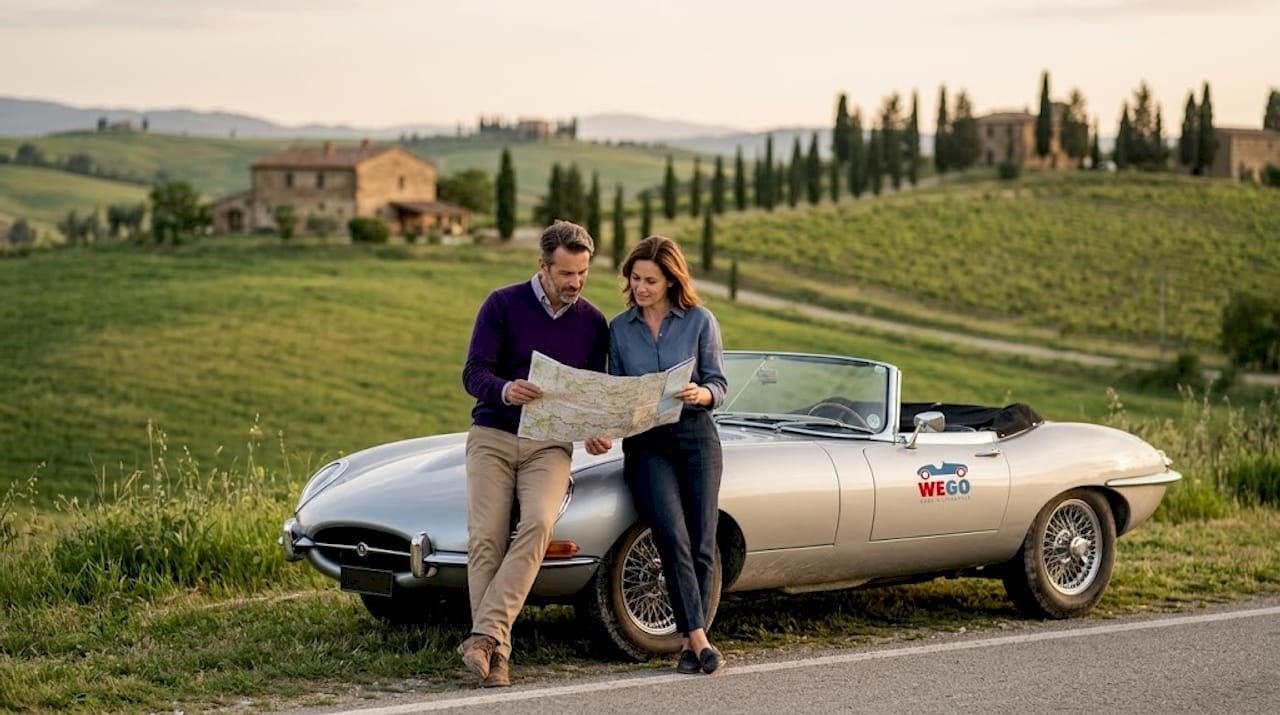
The Grand Tour was never meant to be a vacation. It began in the 18th century as a serious educational mission for Europe’s elite young men, who spent months, sometimes years, traveling through France and Italy to study art, classical culture, and high society. Originally an upper-class educational journey, this rite of passage has evolved into something entirely different today: an immersive, curated travel experience through Italy’s most iconic landscapes, cities, and country roads. For travelers who want more than a highlights reel, understanding what a Grand Tour Italy really means can reshape how you plan your entire trip.
Table of Contents
- The history and significance of the original Grand Tour
- Modern grand tours in Italy: luxury guided itineraries across iconic destinations
- Vintage and classic car tours: Italian grand tour driving experiences today
- Comparing Grand Tour formats: guided luxury tours vs vintage car driving experiences
- Choosing your ideal grand tour Italy experience: key considerations for luxury travelers
- Why the modern grand tour should be more than a checklist
- Explore Italy on a grand tour with WEGO classic car rentals and tours
- Frequently asked questions
Key Takeaways
| Point | Details |
|---|---|
| Grand Tour origins | The Grand Tour began as an 18th-century educational journey for elite young European men, centered on Italy’s art and culture. |
| Modern luxury tours | Today’s Grand Tours include curated multi-day guided itineraries by train or coach offering immersive cultural experiences. |
| Vintage car driving | Vintage car rentals and self-drive tours provide personalized, scenic Grand Tour experiences blending culture and automotive passion. |
| Choosing a tour | Selecting between guided tours and vintage car experiences depends on your budget, driving interest, and desired travel pace. |
| Embrace the journey | The true Grand Tour is about slow, immersive travel that connects you deeply to Italy’s culture, beyond just seeing famous sights. |
The history and significance of the original Grand Tour
To understand what a Grand Tour Italy means today, you first need to appreciate just how serious the original version was. This was not sightseeing. Young noblemen, typically from Britain and northern Europe, traveled with tutors, servants, and trunks full of luggage on journeys that could last anywhere from several months to several years. The goal was deliberate cultural immersion, not leisure.
Italy sat at the center of every Grand Tour itinerary. Rome, Florence, Venice, and Naples offered ancient ruins, Renaissance masterpieces, and living examples of classical architecture that no book could replicate. Learning Italian, studying Latin inscriptions firsthand, and observing the social customs of Continental courts were all part of the program.
“The Grand Tour was a key part of a gentleman’s education,” with Italy serving as the defining cultural destination for art study and classical learning.
At its height between 1660 and 1820, the Tour was a central element of upper-class European education, shaping tastes, politics, and artistic patronage for generations. Many young travelers returned home with paintings, sculptures, and architectural drawings that permanently changed the cultural landscape of Britain. The Palladian architecture visible in English country houses today traces directly back to what those travelers saw and absorbed in the Veneto region of Italy.
Key features of the original Grand Tour included:
- Slow overland travel by carriage through France and into Italy
- Extended stays in major Italian cities for study, not just visiting
- Attendance at theatrical performances, public lectures, and artist studios
- Commissioning of portraits and souvenirs to document the journey
- Formal introduction into European intellectual and aristocratic society
This context matters enormously if you want to appreciate what modern luxury Grand Tours are genuinely trying to recreate.
Modern grand tours in Italy: luxury guided itineraries across iconic destinations
Today, luxury operators brand multi-day itineraries across Italy as Grand Tours, and the best ones take that historical intent seriously. These are not rushed bus trips hitting Rome, Florence, and Venice in five days. They are deliberately paced journeys that combine expert-guided cultural visits with fine dining, premium accommodations, and time to actually absorb what you are seeing.
A typical Grand Tour itinerary Italy spans 10 to 17 days and moves through a mix of famous cities and lesser-known destinations. You might spend two nights in Venice before moving south through Tuscany, then continue to Rome and down into Sicily. The hidden gems make the difference. Matera, carved into ancient rock in the Italian south, and Taormina in Sicily represent exactly the kind of discovery that separates a real Grand Tour from a standard package holiday.
One of the most striking modern examples is the five-day luxury rail experience by Orient Express’s La Dolce Vita train, which traces a route through Rome, Venice, Matera, Taormina, and Palermo. The train itself is part of the experience, not just transport.
Here is how modern guided Grand Tours compare across key dimensions:
| Feature | Budget group tour | Luxury guided Grand Tour | Vintage car Grand Tour |
|---|---|---|---|
| Duration | 7 to 10 days | 10 to 17 days | 1 to 7 days |
| Pacing | Fast, checklist-style | Unhurried, immersive | Fully flexible |
| Accommodations | Standard hotels | Boutique and 5-star properties | Your choice |
| Cultural depth | Basic guided visits | Expert narration, private access | Route-driven discovery |
| Driving experience | None | None | Central to the experience |
A typical modern Grand Tour Italy might unfold like this:
- Arrive in Rome for two nights, with guided visits to the Forum, Vatican, and Trastevere neighborhood
- Travel north by train to Florence for the Uffizi Gallery, Ponte Vecchio, and Chianti wine country
- Continue to Venice for gondola rides, private museum access, and cicchetti bar-hopping in Cannaregio
- Drop south to Naples and Pompeii for volcanic history and street food immersion
- End in Sicily with ancient Greek temples, fresh seafood, and Mediterranean light
Pro Tip: If you are browsing curated Italian tours, look for itineraries that include at least one off-the-radar destination alongside the classics. That balance is what separates a genuine Grand Tour from a highlights package.
Vintage and classic car tours: Italian grand tour driving experiences today
For a specific kind of traveler, nothing captures the spirit of the Grand Tour like driving it yourself. Vintage car Grand Tours through scenic Italian regions like Chianti have grown into a serious niche, and it is easy to understand why once you have taken a 1960s Alfa Romeo Spider around a hairpin bend above a Tuscan vineyard at golden hour.
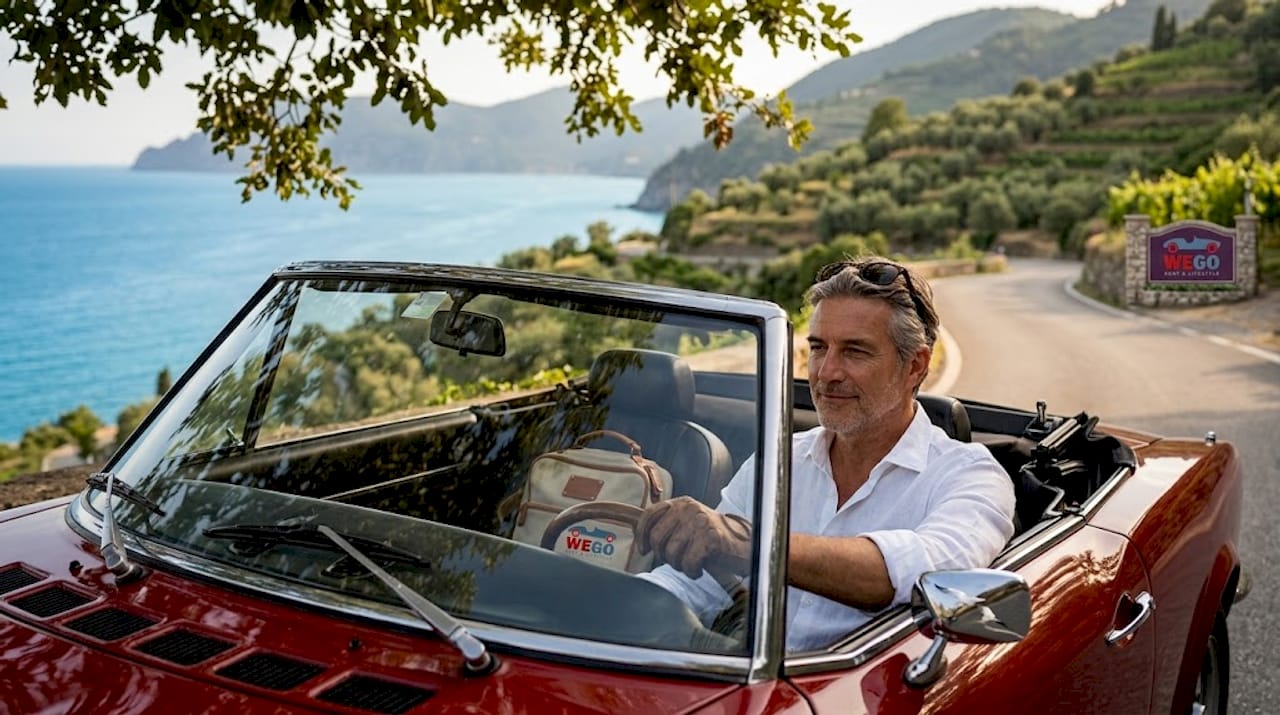
These experiences work differently from guided group tours. You are not following a group or keeping to someone else’s schedule. You get a car, a route book, and on-road support, and you drive. The vehicle is the experience as much as the destination.
Operators typically provide mechanical orientation and curated route books, drawing directly on the Grand Tour’s original educational philosophy. You learn the car before you drive it. You understand the roads. You stop where the scenery demands it.
What makes vintage car day trips worth considering:
- Vehicles with character: Classic Fiat 500s, Alfa Romeo Spiders, and Triumph Spitfires each offer a completely different driving feel and visual impact
- Route storytelling: Good operators build stops into the route at local wineries, medieval hilltop towns, and family-run trattorie that never appear in mainstream guides
- Flexibility: Unlike a guided coach tour, you can linger over a lunch that deserves it or take an unplanned detour up a scenic hillside road
- Mechanical education: Understanding how a vintage car works adds a layer of engagement that modern automatic rentals simply cannot offer
Whether you book classic car day trips or longer classic car rentals for multiple days, the vintage car Grand Tour is built around personal discovery rather than group consensus.
Pro Tip: Ask any rental operator whether their route includes unpaved strade bianche (white gravel roads). These scenic unpaved Tuscan backroads are the kind of detail that turns a pleasant drive into something genuinely memorable.
Comparing Grand Tour formats: guided luxury tours vs vintage car driving experiences
Both formats carry the Grand Tour name honestly, but they serve different travelers with different priorities. Understanding the gap between them saves money and prevents disappointment.
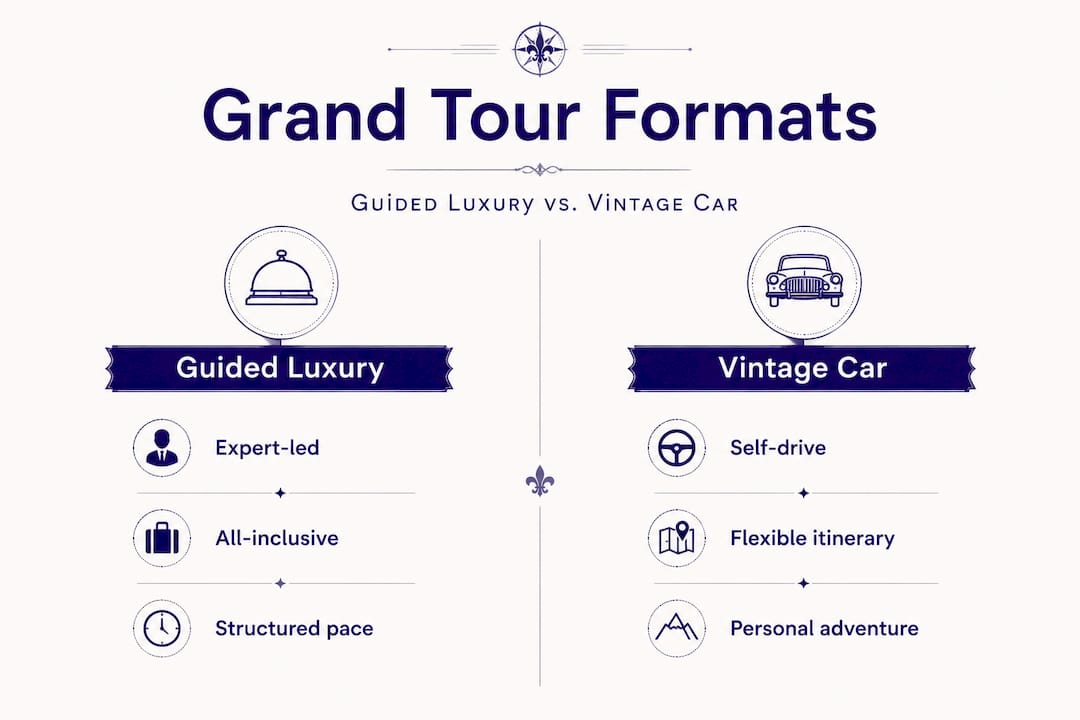
Orient Express’s Grand Tour pricing starts around €15,760 per person for the five-day rail experience. That is a significant investment, and what you are buying is a fully curated, all-inclusive product where every detail is managed for you. You do not think. You arrive, observe, eat beautifully, and absorb.
Vintage car experiences work on a completely different financial scale. Day rentals with curated routes typically start around €900 per couple, making them accessible for luxury travelers without the commitment of a multi-week program.
| Consideration | Guided luxury tour | Vintage car experience |
|---|---|---|
| Price point | €10,000 to €20,000+ per person | From ~€900 per couple per day |
| Flexibility | Fixed itinerary | Fully adaptable |
| Social element | Group travel | Private, partner or solo |
| Driving involvement | None | Central |
| Cultural immersion | Expert-guided depth | Self-directed discovery |
Classic car rental options and classic car day trips represent the accessible, personal end of this spectrum, where the Grand Tour belongs to you rather than a scheduled group.
Choosing your ideal grand tour Italy experience: key considerations for luxury travelers
Getting this choice right comes down to four honest questions you need to ask yourself before booking anything.
Modern luxury Grand Tours adopt unhurried pacing to honor the original’s immersive philosophy, compressing what once took months into 5 to 17 days. Both formats respect that principle. But they deliver it differently.
Here is how to decide:
- Assess your pace preference. If you want someone else to handle every decision and provide context at each stop, a guided luxury tour is the right choice. If you find structured group schedules frustrating and want to follow your own curiosity, a vintage car experience fits better.
- Be honest about your budget. Luxury rail Grand Tours are extraordinary, but at €15,000 or more per person they require serious commitment. Vintage car day trips deliver a genuinely premium experience at a fraction of that cost.
- Evaluate your relationship with driving. Vintage car tours demand comfort behind the wheel of an older vehicle with manual transmission and no modern driver assistance. This is part of the appeal for many, but not for everyone.
- Match the itinerary to your passions. If Renaissance art is your primary interest, a guided tour with a specialist art historian is irreplaceable. If Tuscan scenery, wine country, and the joy of mechanical driving matter more, the car route wins.
Pro Tip: Consider mixing formats within a single Italy trip. Spend three days on a vintage car rental servicethrough Tuscany, then join a guided cultural tour for Rome and Florence. You get immersive driving and expert historical framing without committing exclusively to either format.
Day trip classic car tours work especially well as standalone additions to a broader Italy itinerary rather than the whole trip itself.
Why the modern grand tour should be more than a checklist
Here is a perspective you rarely see in Italy travel guides: the worst thing you can do on a Grand Tour is try to see everything.
The original Grand Tour was about prolonged study and absorption, not rapid movement between famous addresses. Those 18th-century travelers spent weeks in a single city because the point was understanding, not coverage. Modern travelers who book 15-city itineraries and spend 90 minutes at each iconic site are technically traveling through Italy but missing what the Grand Tour was fundamentally about.
The vintage car experience gets this right in a way that surprises most people. When you are driving a 1960s Fiat 500 through the Chianti hills, you cannot be on your phone. You are fully present. The road, the car, the light through the cypress trees — these things demand your attention. That quality of presence is exactly what the original Grand Tour aimed to produce through months of deliberate slow travel.
What separates a meaningful Grand Tour from an expensive vacation is whether the experience changes something in you. That might come through a brilliant guide explaining why Michelangelo’s David looks wrong from the front (it was designed to sit high on a cathedral buttress, not at eye level). It might come from the mechanical satisfaction of double-clutching through a mountain pass in an Alfa Spider. Either way, the vintage car Grand Tour experiences that earn their reputation do so because they slow you down and make Italy mean something specific to you, not just look good in photographs.
Choose fewer places. Go deeper. That is the Grand Tour principle worth preserving.
Explore Italy on a grand tour with WEGO classic car rentals and tours
If the driving version of the Grand Tour speaks to you, WEGO makes it genuinely accessible for luxury travelers who want the real thing.
Choose from a fleet of iconic vintage vehicles including the Fiat 124 Spider, Triumph Spitfire, and other classics for your own personal Grand Tour through Tuscany’s vineyards, hilltop villages, and coastal roads. Every rental includes mechanical orientation and route planning so you arrive confident and ready. Whether you want a single-day classic car day trip through Chianti or a multi-day classic car rental across northern Italy, WEGO’s vintage car rental experiences are built around travelers who want Italy from behind the wheel of something beautiful and real.
Frequently asked questions
What was the original purpose of the Grand Tour?
The Grand Tour was primarily an educational journey for young European noblemen to study art, culture, language, and society, with Italy as the essential destination for classical and Renaissance learning.
How long did traditional Grand Tours typically last?
Original Grand Tours often lasted several months to multiple years, with travelers spending extended periods in single cities for focused cultural study rather than moving quickly.
What types of modern Grand Tour experiences are available in Italy?
Modern Grand Tour options include fully guided multi-day luxury train and coach journeys, and vintage-car self-drive or guided driving experiences through regions like Tuscany, Lombardy, and Sicily.
What should I consider when choosing between a guided tour and a vintage car Grand Tour?
Weigh your budget, comfort with independent driving, preferred travel pace, and whether you want structured expert narration or the freedom to follow your own route and timeline.
Are vintage car Grand Tours suitable for all drivers?
Vintage car tours require basic driving skills and come with on-site mechanical orientation, but they are best suited for drivers comfortable with manual transmission and older vehicles without modern safety assists.
