
Classic car rental best practices for Italy trips
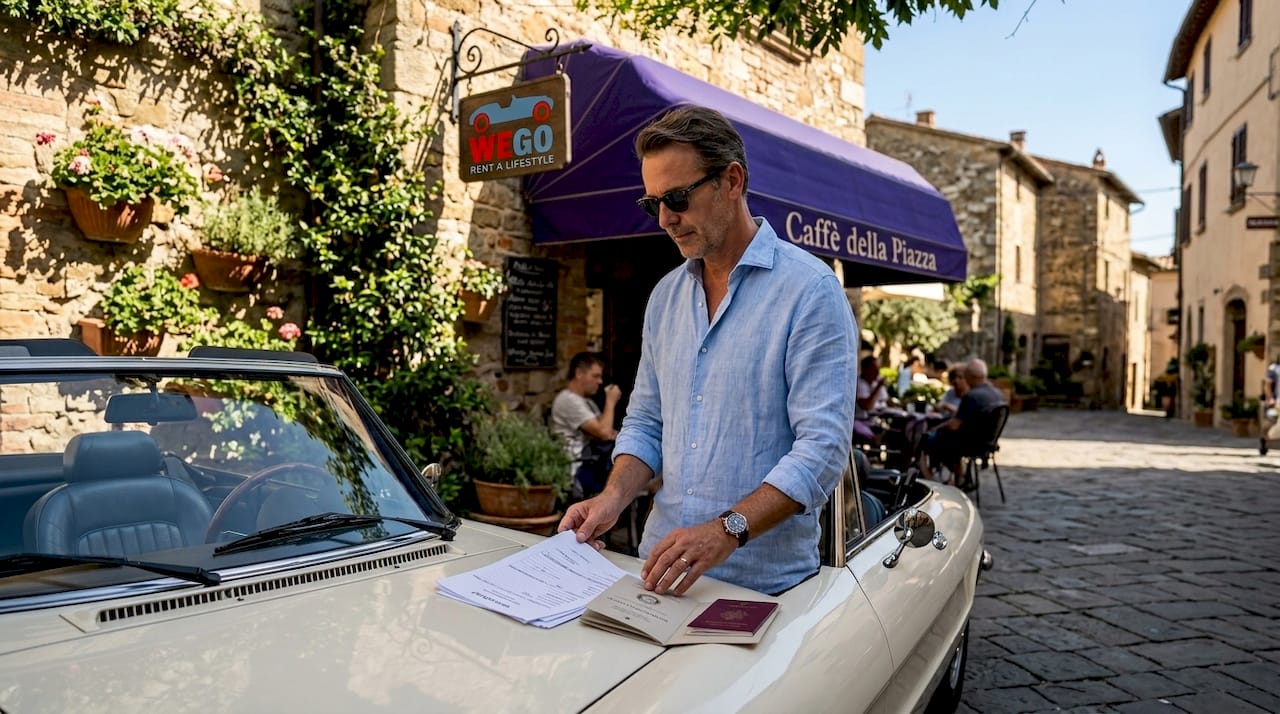
Renting a classic car in Italy sounds like a dream. Wind through Tuscany in a vintage Alfa Romeo, cruise past Lake Como in a Fiat 500, arrive in Verona like you belong in a different era entirely. But the classic car rental best practices that apply to modern vehicles barely scratch the surface of what you need to know here. Vintage cars come with manual gearboxes, restricted city zones, sky-high security deposits, and documentation requirements that can derail your trip before the engine turns over. Get these things right, and you’ll have an experience worth telling for years.
Table of Contents
- Understand rental eligibility and documentation requirements
- Master insurance options and cost considerations
- Navigate Italian ZTL zones and local driving restrictions
- Choose the right classic car and prepare for driving nuances
- Comparison of essential best practices for classic car rentals in Italy
- Why video inspections and local knowledge are rental game-changers
- Explore classic car rentals and scenic tours with WEGO
- Frequently asked questions
Key Takeaways
| Point | Details |
|---|---|
| Prepare documentation | Ensure you meet age, license, and International Driving Permit requirements before renting. |
| Understand insurance | Select insurance coverage wisely to minimize excess fees and protect your rental. |
| Avoid ZTL fines | Confirm hotel ZTL registration or park outside historic centers to prevent costly penalties. |
| Drive carefully | Plan routes under 200 km/day and develop manual driving skills for classic cars. |
| Document condition | Record video at pickup and return to avoid false damage claims. |
Understand rental eligibility and documentation requirements
Before you even browse vehicle options, the eligibility hurdles for classic car hiring advice are worth understanding clearly. Italy’s rental market is more conservative than most travelers expect, and vintage car providers apply stricter standards than standard rental agencies.
Here is what you will typically need:
- Age: Minimum age is 25 with a valid driver’s license and a clean driving record. Some high-value vehicles set the floor at 30.
- License category: A Category B license covers most classic cars with manual transmissions. Make sure yours hasn’t expired.
- International Driving Permit (IDP): Non-EU drivers must carry this alongside their home country license. It is a translation document, not a replacement.
- Clean record: Providers check your history. Multiple violations or recent at-fault accidents can result in a declined booking.
- Credit card: The primary driver’s credit card is required for the security deposit hold. Debit cards are rarely accepted.
The IDP catches many American and British travelers off guard. You apply for it through your national automobile association before leaving home, and it is valid for one year. Do not wait until you arrive in Italy. No IDP means no keys.
One thing worth knowing when reviewing classic car rental eligibility: providers will often ask for your license in advance during the booking process, not just at pickup. This is standard practice with vintage vehicles, where the provider has a genuine stake in who is handling their asset.
Master insurance options and cost considerations
Insurance is where many classic car renters get surprised, and not pleasantly. The numbers are bigger here than with a standard compact rental, and the coverage structure is different enough to warrant careful attention.
How the coverage tiers typically work:
- Basic Collision Damage Waiver (CDW) is included by default. But CDW typically carries an excess of €3,000 to €8,000, meaning you pay that amount out of pocket before any insurance kicks in.
- Upgrading to full Kasko coverage (comprehensive) reduces that excess to as low as €0 to €1,000, at an additional cost of roughly €100 to €250 per day.
- The security deposit via credit card block can run from €3,000 to €10,000. This is a hold, not a charge, but it freezes that amount on your card for the rental duration.
Additional cost factors to watch:
- Fuel policy: Most classic car providers use a full-to-full policy. Return it with the same level you received it, or face premium refueling charges.
- Mileage caps: Many vintage rentals cap daily mileage at 100 to 200 km. Going over triggers per-kilometer fees that add up fast on scenic routes.
- Optional extras: GPS units, additional drivers, and roadside assistance packages all carry added fees.
Pro Tip: Check whether your personal credit card provides rental insurance as a card benefit. Some premium travel cards cover CDW automatically. If yours does, you may be able to skip the basic CDW charge and put that budget toward upgrading your Kasko coverage instead.
Third-party zero-deductible insurance policies are another option worth researching before your trip. These are sold independently and can cap your liability on top of whatever the provider offers.
Navigate Italian ZTL zones and local driving restrictions
Italy’s Zona Traffico Limitato (ZTL) system is one of the most common sources of expensive surprises for tourists. These are restricted traffic zones in historic city centers, enforced by automated cameras that photograph license plates and issue fines automatically. You will not know you received one until a letter arrives at your home weeks or months later.
Key things to know:
- Classic cars in ZTL zones like Florence and Siena face fines up to €200 per violation if your plate is not registered for entry.
- Hotels located inside a ZTL can register your rental vehicle’s license plate for temporary access, typically valid for 24 to 48 hours. Call ahead and confirm this before you arrive.
- The fines travel back to the rental company first. They pass the charge directly to you, often adding an administrative fee on top.
- Outside historic centers, look for blue-striped parking spaces for paid parking and white-striped spaces for free parking. Yellow stripes are reserved.
- Parking direction matters. In Italy, you must park facing the direction of traffic flow. Parking against traffic is a fineable offense, even if the space itself is legal.
Pro Tip: Do not rely on Google Maps for ZTL boundaries. The app does not accurately reflect which zones are active, which have time-restricted hours, and which require advance registration. Use dedicated Italy traffic apps or ask your rental provider directly. This single step can save you hundreds in fines.
For scenic day routes outside the city, classic car driving in Italy is genuinely liberating. The Chianti roads between Florence and Siena, the Lombard lake roads, and the Veneto countryside do not have ZTL complications once you are clear of the urban cores. Leave the cities for walking and save the car for where it belongs: open road, rolling hills, and good light.

If you’re planning stops in smaller medieval towns, parking outside the historic center and walking in is both the safer and more atmospheric choice.
Choose the right classic car and prepare for driving nuances
Choosing the right vehicle is where top classic car rental experiences are made or broken. A vintage Alfa Romeo Giulia Spider is beautiful. It is also not the right choice for someone who has not touched a manual transmission in five years, especially on narrow hillside roads.
Follow this preparation sequence before getting behind the wheel:
- Assess your manual transmission confidence honestly. Vintage cars like the Fiat 500 require genuine manual driving skills and a Category B license. If you learned on automatic, practice before your trip, not during it.
- Plan your daily route under 200 km. Mileage caps are real, and classic cars are not built for marathon highway sessions. Shorter routes let you stop, explore, and actually enjoy the experience.
- Inspect the car on pickup. Walk the entire vehicle, noting every existing scratch, dent, and chip. Film a 360-degree video with the time and date visible. Do not skip this, even if the staff seems impatient.
- Repeat the inspection on return. Film again. This footage is your protection against false damage claims, which do occasionally happen.
- Drive smoothly. Classic cars reward patience. Avoid aggressive acceleration, hard braking, and short cuts through tight village alleys where the car’s width becomes a genuine problem.
Additional vehicle-specific considerations:
- Ground clearance is lower than modern cars. Steep driveways, unmarked speed bumps, and rough gravel lanes can cause real damage.
- Power steering is often absent. Parking in tight spaces takes more effort than you expect.
- Temperature sensitivity: Older engines can run hotter. Check the temperature gauge regularly and do not push the car in peak summer heat.
Detailed driving tips for classic cars in the Italian context make a real difference in both enjoyment and avoiding unnecessary damage costs.
Comparison of essential best practices for classic car rentals in Italy
Treating classic car rental essentials like a checklist is exactly the right approach. Here is a side-by-side summary of the five critical practice areas:
| Practice area | What you need | Common mistake |
|---|---|---|
| Eligibility | Age 25+, Category B license, IDP for non-EU, clean record, credit card | Forgetting IDP until arrival |
| Insurance | CDW as baseline; Kasko upgrade strongly recommended | Assuming CDW covers everything |
| ZTL zones | Hotel registration, park outside historic centers | Trusting Google Maps for restrictions |
| Vehicle handling | Manual transmission skills, smooth driving, daily mileage under 200 km | Underestimating manual gear demands |
| Cost planning | Fuel policy, mileage caps, deposit hold amount | Overlooking the credit card deposit block |
The key insight across all five areas: the common mistakes in classic rentals are almost always avoidable with 30 minutes of research before booking. None of these issues are obscure. They are simply not front of mind for travelers who approach classic car hiring advice the same way they approach renting a standard vehicle.
Why video inspections and local knowledge are rental game-changers
Here is the honest truth that most classic vehicle rental guidelines will not tell you directly: the rental company’s staff is not your adversary, but their incentives and yours do not fully align at vehicle return. Any pre-existing damage that was not documented becomes a conversation you do not want to have.
Always video-record the car at both pickup and return, and never use Google Maps to navigate ZTL zones. These two habits alone eliminate the majority of avoidable financial surprises in classic car rentals across Italy.
The video inspection is not about distrust. It is about giving both parties a clean record of the vehicle’s condition. Providers who operate with integrity will welcome this. Anyone who seems bothered by it is a provider worth being cautious about.
The ZTL issue runs deeper than most classic car trip planning guides acknowledge. The zones change. Time restrictions vary by season. Some historic centers added new ZTL cameras in 2025 and 2026 that are not yet reflected in most mapping apps. The only reliable source is a direct call to your hotel or a local contact who knows the current situation on the ground.
There is also a pace argument to be made. Travelers who plan 400 km days in vintage cars are missing the point entirely. These vehicles were built for a different era of travel. They reward slow mornings, winding roads, and stops at roadside trattorias. Planning realistically with mapped day trip routes is not just smart financially. It is how these cars were meant to be experienced.
Explore classic car rentals and scenic tours with WEGO
Now that you know the best practices and insider tips, turning knowledge into an actual experience is the next step.
WEGO offers a curated selection of vintage and classic cars for rental across Italy’s most scenic regions, from Tuscany and Lombardy to Veneto. Whether you want a full classic car day trip through Chianti wine country or a weekend with a Fiat 500 on the roads around Lake Como, every rental comes with local expertise built in. The team handles the ZTL navigation guidance, insurance advice, and route planning so you arrive knowing exactly what to expect. Explore WEGO’s vintage car packages to find the vehicle and itinerary that fits your trip.
Frequently asked questions
What is the minimum age to rent a classic car in Italy?
Minimum age is typically 25 with a valid driver’s license and a clean driving record. Some providers set the limit higher for premium or high-value classic vehicles.
Do non-EU drivers need an International Driving Permit (IDP) to rent classic cars in Italy?
Yes. Italian law requires non-EU drivers to carry an IDP alongside their home country license, and most classic car providers will not hand over keys without one.
What insurance coverage is recommended for classic car rentals?
Basic CDW is standard but comes with excess fees of €3,000 to €8,000. Upgrading to full Kasko coverage for an additional €100 to €250 per day reduces that excess significantly and is worth the cost for most renters.
How can I avoid fines when driving a classic car in Italian historic city centers?
Never enter a ZTL zone without confirming your hotel has registered your license plate for temporary access. Park outside historic centers and explore on foot to avoid automated fines of up to €200 per violation.
What driving skills are required for classic car rentals in Tuscany?
Manual transmission skills are essential along with a Category B license. Non-EU drivers also need an IDP, and reputable providers typically offer a driving briefing to help you get comfortable before heading out on winding Tuscan roads.
