
Italy’s scenic coastal roads: the complete driving guide
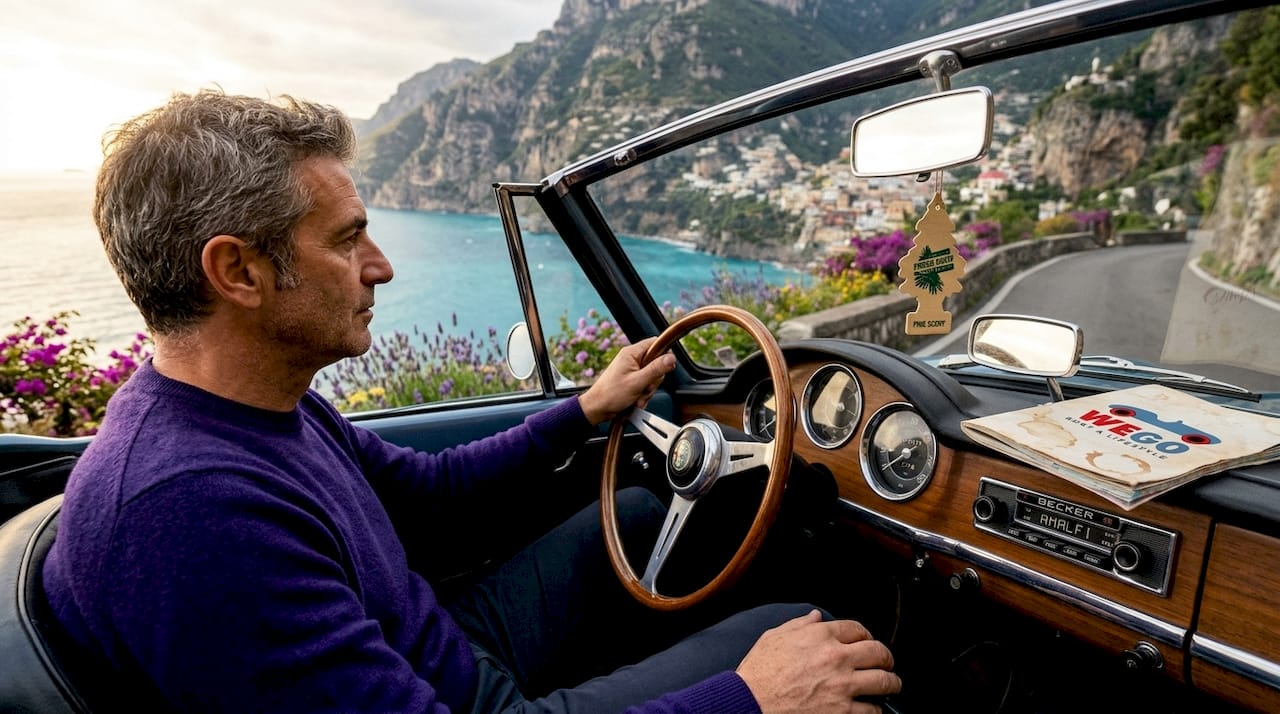
Fifty kilometers doesn’t sound like much. But on what is a scenic coastal road in Italy, that same distance can consume half a day, a full tank of concentration, and every bit of your driving confidence. Italy’s coastlines are genuinely unlike anything else in Europe. The roads coil along sheer cliff edges, disappear into tunnel darkness, and reopen to ocean views so sudden they make passengers gasp. This guide breaks down the three most important coastal routes, explains what actually makes driving them different from anywhere else, and shows you how to experience them at the level they deserve.
Table of Contents
- Overview of Italy’s most iconic scenic coastal roads
- Driving experience and practical considerations on Italy’s coastal roads
- Comparing Italy’s scenic coastal roads: features, distances, and best times
- Enhancing your coastal drive: vintage cars, slow travel, and local experiences
- Why the conventional driving approach misses the magic of Italy’s coastal roads
- Explore Italy’s scenic coastal roads in style with WEGO vintage car rentals
- Frequently asked questions
Key Takeaways
| Point | Details |
|---|---|
| Top coastal roads | Italy’s scenic coastal roads like the Amalfi Coast, Italian Riviera, and Sardinia each offer unique landscapes and travel experiences. |
| Driving challenges | Narrow, winding roads with strict traffic regulations require careful planning and cautious driving. |
| Best travel timing | Spring and autumn provide the most pleasant conditions and fewer crowds on popular routes. |
| Slow travel benefits | Embracing slow travel and combining driving with ferries enhances enjoyment and reduces stress. |
| Vintage car appeal | Renting vintage cars adds authenticity and style for memorable coastal road trips. |
Overview of Italy’s most iconic scenic coastal roads
Italy’s coastline runs for roughly 7,600 kilometers, but not all of it qualifies as scenery worth rerouting your life for. Three routes consistently stand apart when it comes to the best coastal drives in Italy, and each one rewards a completely different travel approach.
The Amalfi Coast (SS163) is the one most people picture when they imagine picturesque drives along the Italian coast. The SS163 spans about 50 to 60 km and is best driven early morning or late evening to avoid the brutal congestion that turns midday into a bumper-to-bumper ordeal. What makes it remarkable isn’t just the sea views. It’s the verticality. Towns like Positano are stacked on cliffs like theater sets, and the road threads between them with barely a meter to spare on either side.
The Italian Riviera is a longer, more varied experience. The Riviera covers 350 km of Ligurian coastline, connecting Portofino, Cinque Terre, and the French border, and is ideal in spring or early autumn to dodge the summer crowds that swamp the cliff-side villages. This route rewards slower, stop-heavy driving. The harbors, the colored houses, the seafood at port-side restaurants: none of it works if you’re rushing.
Sardinia’s SS125 is the wildest of the three. The SS125 offers roughly 80 km of striking limestone cliffs, turquoise gulfs, and almost no commercial interruption. If the Amalfi Coast is a masterpiece hung in a crowded gallery, the SS125 is the same quality of painting in a nearly empty room.
At a glance: three routes compared
| Route | Length | Key highlights | Ideal season |
|---|---|---|---|
| Amalfi Coast SS163 | 50 to 60 km | Cliffside villages, sea views, Positano, Ravello | Spring, early autumn |
| Italian Riviera | 350 km | Portofino, Cinque Terre, Ligurian harbors | Spring, early autumn |
| Sardinia SS125 | ~80 km | Limestone cliffs, remote gulfs, zero crowds | Late spring, summer |
For travelers interested in classic car rental options, all three routes offer unforgettable backdrops. But the driving conditions vary significantly. Here’s what to know before you go.
What each route does best:
- Amalfi Coast: unmatched drama and visual density per kilometer
- Italian Riviera: cultural richness combined with maritime scenery
- Sardinia SS125: raw, unspoiled coastal landscape with minimal traffic
Driving experience and practical considerations on Italy’s coastal roads
Italy’s coastal roads are not like highways. Not remotely. Coastal roads in Italy are often narrow, lack guardrails, and carry strict traffic laws including mandatory seat belts and headlights outside city limits. That last point surprises many American drivers. In Italy, headlights are required at all times on roads outside urban areas, day or night, regardless of visibility.
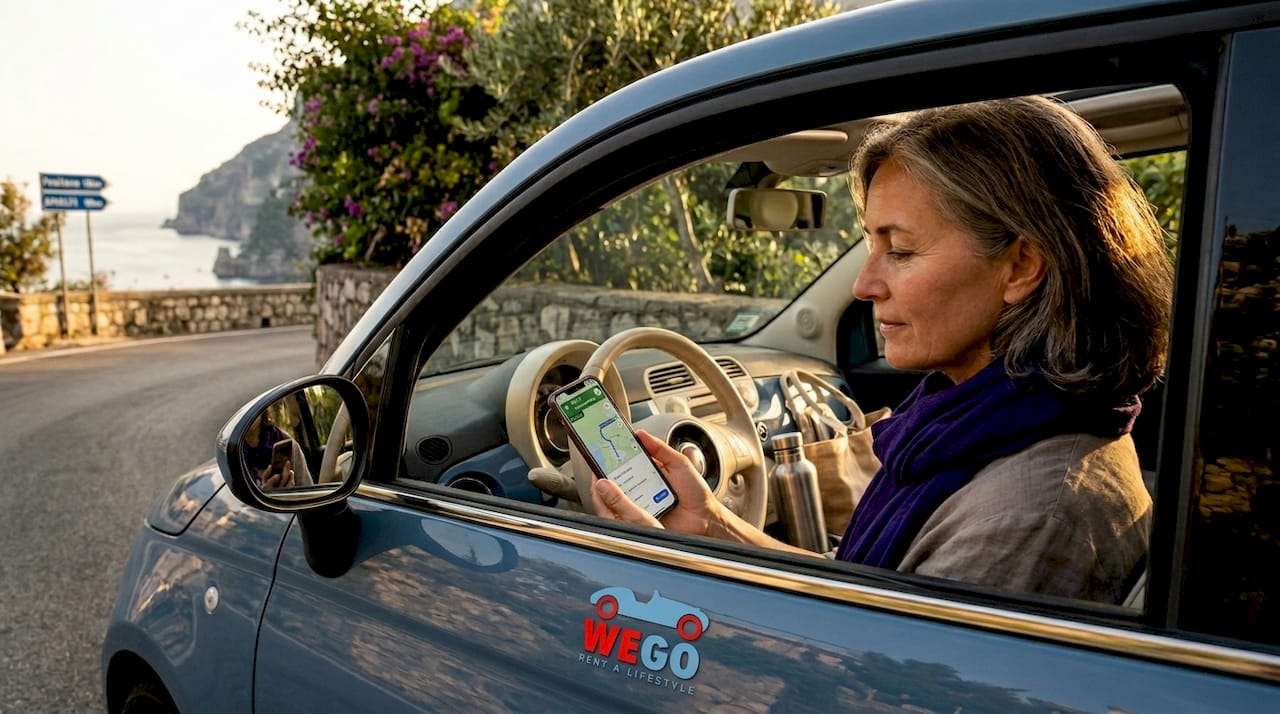
ZTL zones (Zone a Traffico Limitato, meaning restricted traffic zones) are another hazard that catches visitors off guard. ZTL zones monitor unauthorized vehicle entry via cameras, and fines are enforced strictly with no on-the-spot warnings. Many of the most beautiful coastal towns have ZTL designations covering their historic centers. If you drive into one without authorization, the fine follows you home.
Parking is the other major stressor. Parking on routes like the Amalfi Coast is so difficult that experts consistently recommend leaving your car at your hotel and relying on local taxis or ferries instead. This isn’t defeatist advice. It’s the difference between spending your trip stressed and circling, versus actually enjoying the towns you came to see.
Practical driving checklist for Italy’s coastal roads:
- Confirm your rental car is not registered in a ZTL zone before entering any historic town center
- Always drive with headlights on outside urban areas
- Seat belts are non-negotiable and actively enforced
- Use narrow road passing etiquette: the car with the easier reverse has right of way
- Download offline maps before you go as cell service is intermittent on cliff sections
- Budget extra time: a 30 km stretch on the Amalfi Coast can take 90 minutes in moderate traffic
If you want the driving experience without the navigation stress, classic car day trips with an experienced route guide change the entire equation. Likewise, booking vintage car rentals from a provider familiar with Italian road systems helps you avoid ZTL violations before they happen.
Pro Tip: Before renting any vehicle for Italian coastal roads, photograph every street sign at your hotel and confirm with the rental provider whether ZTL restrictions apply to your planned route.
Comparing Italy’s scenic coastal roads: features, distances, and best times
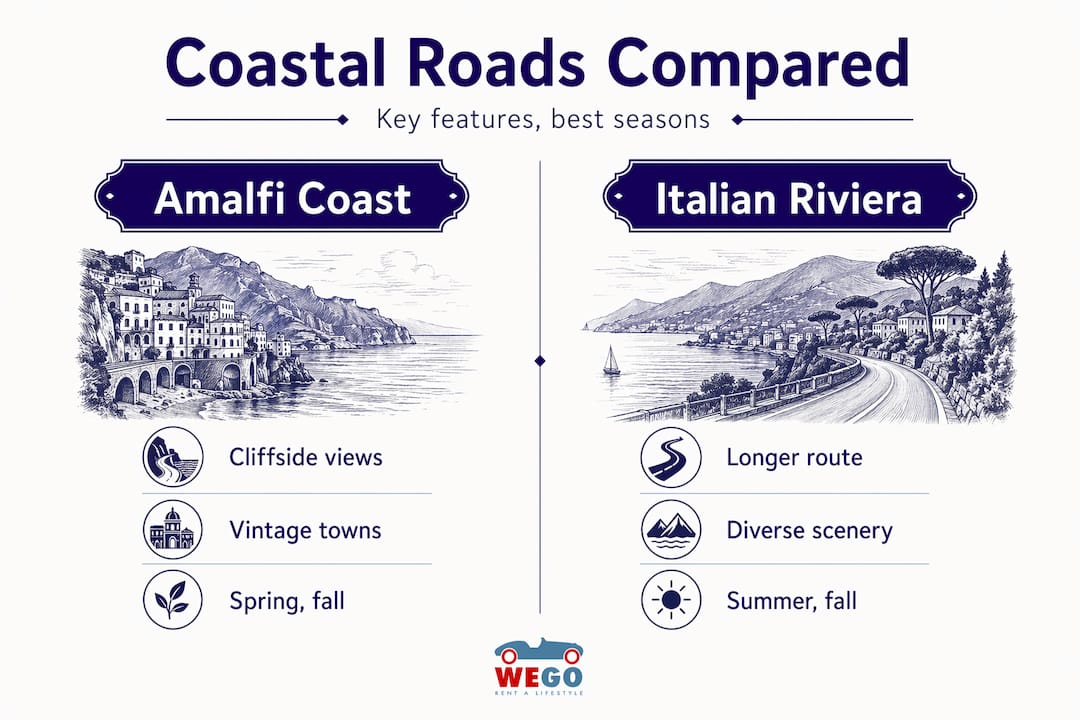
Choosing between these routes is genuinely a lifestyle decision. They don’t just look different. They feeldifferent. Here’s a framework for deciding which one fits your trip.
Step-by-step planning approach:
- Define your pace. If you want to stop often and linger in fishing villages, Sardinia or the Riviera suits you better than the Amalfi Coast, where stopping safely is genuinely difficult.
- Check your season. The Italian Riviera is best in spring or early autumn to avoid the summer crowds that pack both the roads and the harbors.
- Plan your direction. The best direction on the Amalfi Coast is Sorrento to Salerno to keep the car on the sea side, making it easier to access viewpoints and pull over safely.
- Build in buffer time. Every coastal road trip Italy itinerary underestimates travel time by at least 40 percent on the first attempt.
- Decide your priorities. Views, culture, food, photography, or driving for its own sake. Each route delivers differently on each.
Detailed route comparison
| Route | Drive time estimate | Must-stop towns | Ferry option available | Vintage car suitability |
|---|---|---|---|---|
| Amalfi Coast SS163 | 2 to 4 hours (without stops) | Positano, Amalfi, Ravello | Yes (Positano to Amalfi) | High, with guidance |
| Italian Riviera | Full day minimum | Portofino, Monterosso, Vernazza | Yes (between Cinque Terre villages) | High on northern stretches |
| Sardinia SS125 | 2 to 3 hours | Baunei, Santa Maria Navarrese | Limited | Excellent, uncrowded roads |
Sardinia’s SS125 route is 50 miles of pristine limestone cliffs offering a wilder, far less commercialized coastal experience than the Amalfi. That distinction matters if your goal is photography or truly feeling the landscape rather than ticking off famous viewpoints.
Pro Tip: On the Amalfi Coast, drive the route early morning before 8 a.m. once for the light and the silence, then switch to ferries between towns for the rest of the day. You get the driving experience and the aerial view of the coastline from the water.
Want to rent a classic car for one of these routes? Browse classic car tours in Italy to find curated experiences matched to your timeline and interests.
Enhancing your coastal drive: vintage cars, slow travel, and local experiences
There is a specific version of these roads that most tourists never experience. It happens when you’re moving at the right pace, in the right vehicle, with no particular deadline. Italy’s rural and coastal roads are ideal for slow touring in vintage cars, where the journey itself becomes the destination rather than an obstacle between sights.
A vintage car on these roads is not just aesthetically satisfying, though it absolutely is that. It’s also practically appropriate. The roads were built in eras when cars were smaller. A Fiat 500, a Porsche 356, a Triumph Spitfire: these vehicles fit the lanes, the atmosphere, and the pace in a way that a modern crossover SUV simply does not. You feel the road. You smell the sea. The engine note echoes off limestone walls in a way that turns every tunnel into a brief concert.
Ways to deepen your coastal road experience:
- Stop at working fishing villages rather than tourist ports for an honest picture of coastal life
- Eat lunch where locals eat, not where the menus have photographs
- Take a boat tour at dusk to see the cliffs you drove above from below
- Combine vintage car rentals with ferry legs on the Amalfi Coast for the ideal mix of driving and sea perspective
- Allow yourself at least one unplanned stop per hour of driving
Local tourism consistently recommends ferries as a stress-free alternative to driving during high season on the Amalfi Coast. Use this not as a replacement for the driving experience, but as a complement. Drive the morning leg. Ferry the afternoon. The views from the water are completely different, and they give you the kind of perspective on the landscape that no road can provide.
Pro Tip: Book a Porsche 356 Nera rental or a Triumph Spitfire for the Riviera section specifically. The open-top experience on that coastline, with the Ligurian breeze and the light in late afternoon, is genuinely hard to replicate in any other way.
“The road is not a problem to solve. On Italy’s coastlines, the road is the experience. Slow down, and it gives everything. Rush, and it gives you nothing but stress.”
Why the conventional driving approach misses the magic of Italy’s coastal roads
Most travel advice about Italy’s coastal roads centers on itineraries. How many towns can you visit in five days? Which viewpoints are unmissable? What’s the fastest way to get from Sorrento to Salerno? This is the wrong frame entirely.
The travelers who remember these roads most vividly are almost never the ones who covered the most ground. They’re the ones who stopped when the light looked interesting. Who pulled over not because there was a designated viewpoint but because something caught their eye. Who spent two hours in a single harbor town because the espresso was good and there was a fishing boat coming in.
Here’s the uncomfortable reality: the narrow roads, the scarce parking, the traffic jams, these are not problems with Italy’s coastal roads. They are features. They force you to slow down. They make covering ground difficult by design, because the design of these roads predates the idea that roads should be fast. When you stop fighting the friction and start working with it, the whole trip transforms.
This is why mixing transport modes is not a compromise. It’s the smartest way to approach popular Italian coastal routes. Drive the sections where driving is the point. Take the ferry where the road is the bottleneck. Walk the village streets. Sit on a harbor wall. The classic car day trips that work best are built around this philosophy: drive for the experience of driving, and use other transport for the experience of being somewhere.
Modern rental cars make this harder because they insulate you from the environment. Air conditioning, noise cancellation, large touchscreens: every feature designed for comfort is simultaneously a feature that puts distance between you and the road. A vintage car with wind-down windows and an engine you can hear is a fundamentally different relationship with the landscape. That’s not nostalgia. That’s sensory engagement, and it’s the mechanism by which these drives actually become memorable rather than merely documented.
Explore Italy’s scenic coastal roads in style with WEGO vintage car rentals
If you’ve read this far, you already know that what are Italy’s scenic roads is not just a geography question. It’s a question about how to experience them fully.
WEGO specializes in exactly this. With a curated fleet of iconic vintage models including the Porsche 356 Nera and the Triumph Spitfire, every classic car rental is matched to the roads and the atmosphere of Italy’s most beautiful coastlines. WEGO’s team understands ZTL zones, knows the best windows for driving popular routes, and builds classic car day trips around pace rather than distance. Whether you’re planning a romantic coastal drive, a photography trip, or simply the kind of experience you’ll still be talking about in ten years, vintage car rentals in Italy through WEGO are the starting point worth booking.
Frequently asked questions
What is the best time to drive Italy’s scenic coastal roads?
Spring and early autumn are ideal for the Amalfi Coast and Italian Riviera, offering good weather and manageable traffic. Experts advise avoiding August entirely on the Amalfi Coast due to extreme congestion, recommending early morning or late evening drives when unavoidable.
Are Italy’s coastal roads safe for inexperienced drivers?
The roads can be narrow, steep, and largely without guardrails, making them genuinely challenging. The Amalfi Coast specifically is not recommended for nervous drivers; parking at your hotel and using ferries or taxis is a legitimate and popular alternative.
Can I use my international driver’s license on these roads?
Yes, international licenses are accepted, but you must familiarize yourself with Italian traffic laws before driving. ZTL zones use cameras to track unauthorized entry, and fines can be issued weeks later to your home address.
Are there alternatives to driving on crowded coastal roads in Italy?
Absolutely. Ferries between coastal towns are scenic, stress-free, and often faster than driving in peak season. Ferries are the recommended alternative for the Amalfi Coast during summer, and local bus routes serve many Riviera villages well.
What makes vintage car rentals a special way to explore Italy’s coastal roads?
Vintage cars connect you physically and sensory to the landscape in a way modern vehicles cannot replicate. Vintage car rentals pair perfectly with Italy’s coastal drives, offering an authentic relationship with the road, the wind, and the scenery that defines these routes.
